Recent articles
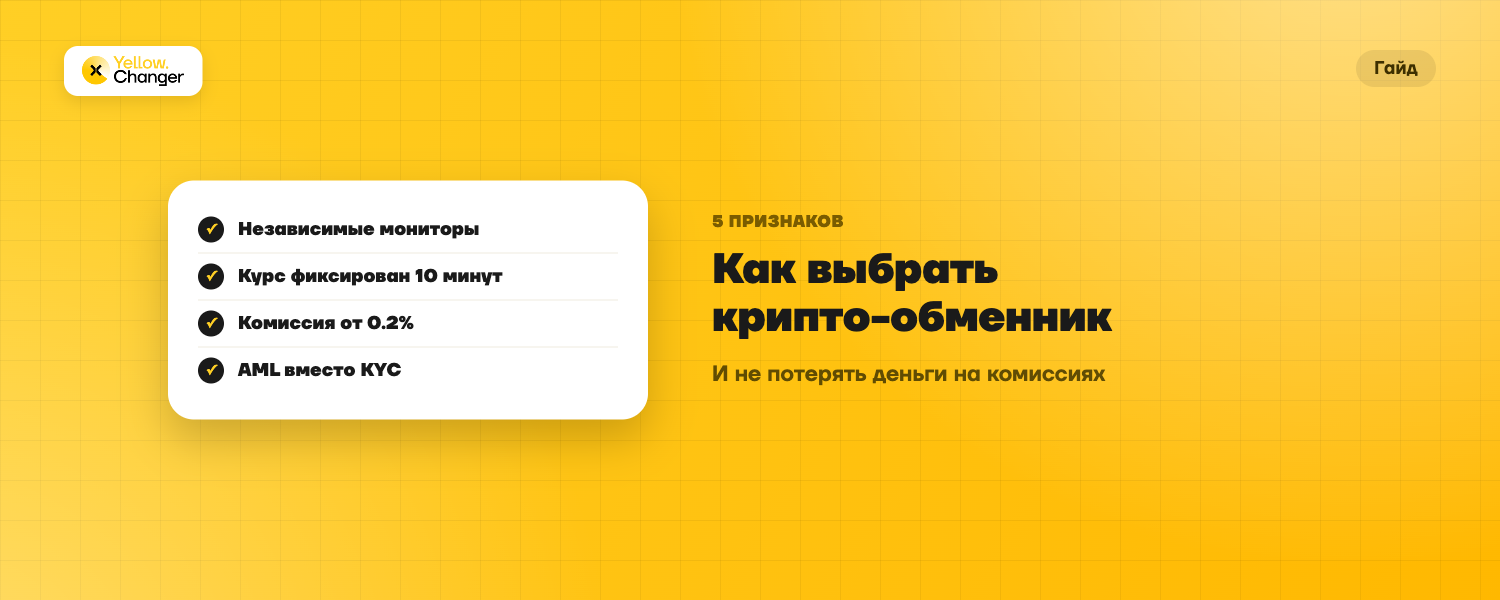
How to choose a crypto exchanger without losing money: five things to check
Jul 29, 2026
There are dozens of exchangers, and not all of them are transparent about fees, limits, and AML policy. Here are five concrete things to check before sending a deposit anywhere.
How to exchange for Monero (XMR): from USDT, TON or Litecoin
You can exchange directly for Monero from several currencies — USDT on any supported network, TON, or Litecoin — without cashing out to fiat first. The service accepts a deposit in the source currency and pays out XMR to the wallet you provide, no identity verification required.
Why Monero is a different case entirely
On most blockchains — including Bitcoin, TON and USDT's networks — transaction history is public: anyone can look up an address's balance and where its transfers went. Monero works differently. Its RingCT technology hides both the transfer amount and the recipient from outside observers by default, not as an opt-in feature. That's part of why several major exchanges have dropped privacy-coin listings in recent years under regulatory pressure — and why some XMR holders started looking for direct exchange routes instead of buying on an exchange and withdrawing afterward.
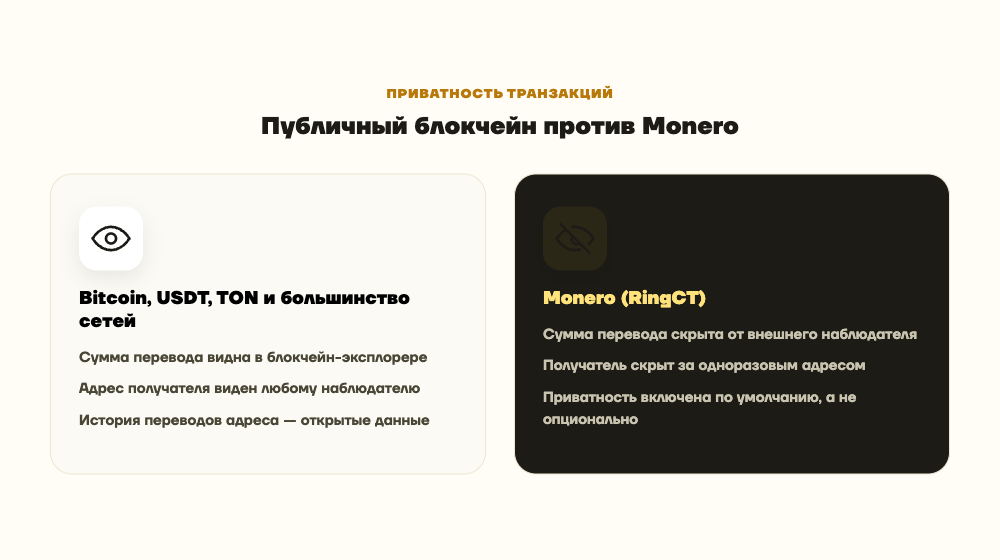
How Monero differs from public blockchains like Bitcoin or USDT
What you can actually exchange for XMR
YellowChanger runs dedicated pairs for exchanging into Monero: from USDT on any of the eight supported networks — USDT → XMR, from TON (Gram) → XMR, and from Litecoin → XMR. The mechanics are the same for all three: enter the amount, send the deposit in the source currency, receive XMR at your wallet once the network confirms it.
What to know on the technical side
YellowChanger confirms a Monero deposit after 60 network confirmations — noticeably more than most other currencies on the service. That's not a delay on the service's end; it's a property of the network itself — the longer a block's history is treated as statistically irreversible, the safer it is to treat the transfer as final.
60 network confirmations is roughly three times more than most other currencies on the service, and that's a property of the Monero network itself, not a choice made by YellowChanger.
Second detail worth knowing: Monero addresses are longer and don't resemble a Bitcoin or TON address, so they're easier to mistype by hand — copy the address rather than retyping it.
How the exchange works
All three pairs run in "Yellow" mode, with the rate locked for 10 minutes from when the request is created, and in "Green" mode, at a floating rate with fees starting at 0.6% and dropping to as low as 0.2% as monthly trading volume grows. No identity verification is required — instead, an automatic AML check screens the sending address, and if it doesn't fall into a higher-risk bracket, the payout clears without manual review.
FAQ
What currencies can I exchange for Monero on YellowChanger?
USDT (on any supported network), TON, and Litecoin — all three pairs work both ways, so you can exchange XMR back too.
Why don't some exchanges support Monero?
Default transaction privacy makes it harder for centralized platforms to meet fund-transparency requirements, which is why a number of exchanges have dropped XMR and similar coins over time.
Does a Monero deposit take longer to credit?
Yes, longer than most other currencies on the service — it needs 60 network confirmations before crediting, which is a property of the Monero network itself, not a choice made by the service.
Is verification required to exchange for XMR?
No, KYC isn't required. Only the sending address is checked under the AML policy.